
NAD+ & Cellular Energy
NAD+ and Sleep: Exploring the Connection Between Cellular Metabolism and the Circadian Clock

What emerging science tells us about NAD+, circadian biology, cellular energy, aging, and sleep.
How NAD+ biology may help scientists better understand the relationship between metabolism, circadian rhythms, aging, and sleep.
Sleep is one of the foundations of human health
Although we spend roughly one-third of our lives sleeping, sleep is far from a passive state. During sleep, the body and brain undergo important processes associated with physical recovery, memory consolidation, metabolic regulation, immune function, and emotional well-being.
As longevity science advances, researchers are increasingly interested in the biological mechanisms that connect sleep, metabolism, circadian rhythms, and aging.
One molecule receiving considerable scientific attention in this area is nicotinamide adenine dinucleotide (NAD+).
But what exactly is the relationship between NAD+ and sleep?
The answer begins with our biological clock.

Why Sleep Matters
Healthy sleep supports many essential physiological functions.
Physical Recovery
During sleep, the body coordinates processes involved in tissue maintenance, energy regulation, and physical recovery.
Brain & Cognitive Function
Sleep plays an important role in learning, memory consolidation, attention, and cognitive performance.
Emotional Well-Being
Sleep and emotional regulation are closely connected. Poor sleep can affect mood, concentration, and decision-making.
Metabolic Health
Sleep influences appetite regulation, glucose metabolism, energy balance, and other metabolic processes.
Cardiovascular Health
Normal sleep is associated with physiological processes involved in cardiovascular and blood-pressure regulation. These interconnected effects make sleep an important component of long-term health and healthy aging.
Immune Function
Adequate sleep supports normal immune-system regulation.
What Is NAD+?
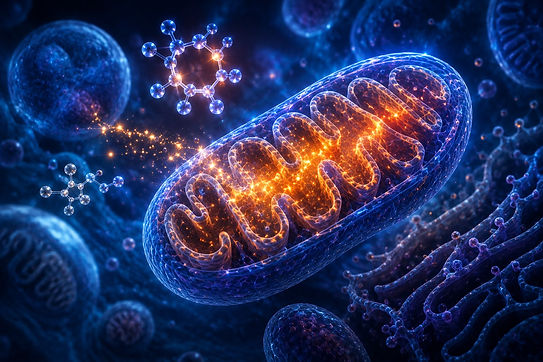
Nicotinamide adenine dinucleotide (NAD+) is a naturally occurring coenzyme found throughout the body.
It plays fundamental roles in cellular metabolism and participates in biological processes involving:
* Cellular energy metabolism * Mitochondrial function * Redox reactions * DNA repair pathways * Cellular stress responses * NAD+-dependent enzymes, including sirtuins * Circadian biology
NAD+ has therefore become an important area of research in metabolism, aging, and cellular health.
NAD+ and the Circadian Clock
One of the most scientifically interesting connections between NAD+ and sleep involves the circadian rhythm.
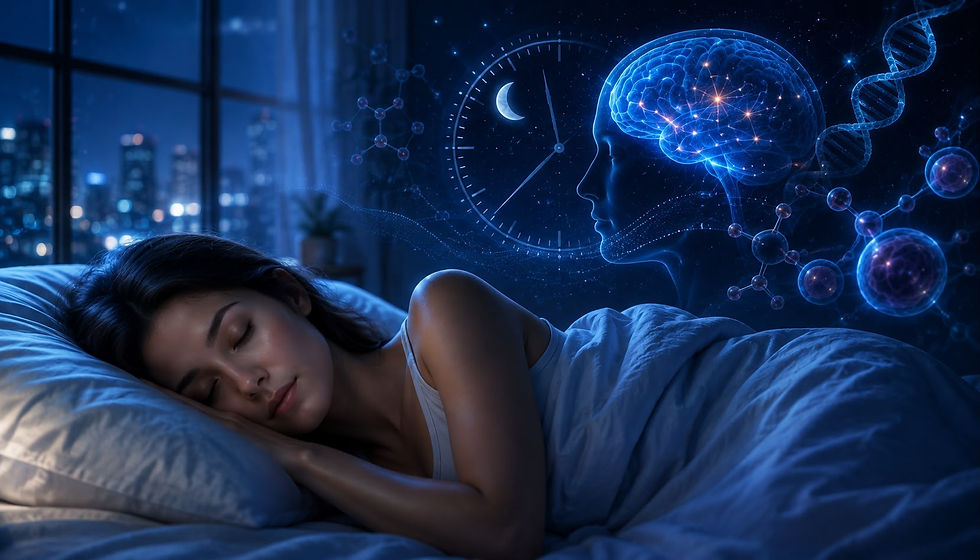
The circadian system is the body’s approximately 24-hour biological timing system. It helps coordinate sleep and wakefulness as well as metabolism, hormone signaling, body temperature, and many other physiological processes. Research has demonstrated that cellular NAD+ levels themselves can fluctuate according to circadian patterns. This relationship works in both directions: The circadian clock influences NAD+ metabolism, while NAD+-dependent biological pathways can also influence components of the molecular clock. This creates an important connection between cellular metabolism and biological timing.
The NAD+–SIRT1–Circadian Connection
A particularly important area of research involves SIRT1, a member of the sirtuin family of NAD+-dependent enzymes.
SIRT1 activity depends partly on the availability of NAD+.
Research has shown that SIRT1 interacts with important molecular components of the circadian clock, including:
-CLOCK
-BMAL1
-PER2
Meanwhile, the circadian CLOCK–BMAL1 system regulates NAMPT, an important enzyme in the NAD+ salvage pathway.
This creates a biological feedback relationship:
Circadian Clock ↓ NAMPT ↓ NAD+ Metabolism ↓ SIRT1 Activity ↓ Circadian Regulation
Scientists continue to investigate how this metabolic-clock relationship changes with aging and how it may influence broader aspects of health.
NAD+, Aging, and Circadian Rhythms
Aging is often accompanied by changes in sleep patterns and circadian rhythms.
At the same time, NAD+ metabolism also changes with age. Experimental research has therefore examined whether age-related changes in NAD+ metabolism may interact with the molecular mechanisms controlling circadian rhythms. Animal studies have provided evidence that restoring NAD+ availability can influence certain age-associated changes in circadian gene regulation. These findings are scientifically important, but they should be interpreted carefully. Evidence that NAD+ biology participates in circadian regulation does not automatically mean that NAD+ supplementation has been clinically proven to treat insomnia or improve sleep in humans. More human research is needed to determine the clinical significance of these mechanisms.
NAD+ and Cellular Energy
What About NAD+ and Neurotransmitters?
NAD+ and Oxidative Stress
Supporting Healthy Sleep
Another important connection involves energy metabolism. NAD+ and NADH are central to cellular metabolic reactions and mitochondrial energy production. Mitochondria help convert nutrients into forms of energy that cells can use. Because metabolism and the circadian system are closely interconnected, researchers are studying how cellular energy status communicates with the body’s biological clock. This emerging field is helping scientists understand that: Sleep, metabolism, cellular energy, and circadian biology are not independent systems—they continuously communicate with one another.
Sleep is influenced by a complex network of neurotransmitters and hormones, including serotonin, melatonin, GABA, adenosine, dopamine, and others. NAD+ metabolism intersects with many cellular pathways, creating scientific interest in how metabolic state may indirectly influence neurological and circadian processes. However, it would be premature to conclude that increasing NAD+ directly increases melatonin or reliably extends deep sleep in humans. These relationships remain areas of active investigation.
NAD-related metabolic pathways also participate in cellular redox biology and stress responses. Sleep disruption has been associated in research with changes in oxidative stress and metabolic regulation. Because NAD+, NADH, NADP+, and NADPH participate in interconnected redox and metabolic systems, researchers continue to investigate their roles in maintaining cellular homeostasis. Again, these biological mechanisms are scientifically interesting, but they should not be interpreted as proof that NAD+ supplementation prevents or treats sleep disorders.
While the science surrounding NAD+ and circadian biology continues to develop, several established lifestyle practices can help support healthy sleep. Maintain a Consistent Schedule Try to maintain relatively consistent sleep and wake times. Create a Sleep-Friendly Environment A quiet, dark, comfortable bedroom can support healthy sleep. Reduce Evening Light Exposure Bright light and screen exposure late in the evening may interfere with normal circadian signaling. Exercise Regularly Regular physical activity is associated with numerous health benefits and may support healthy sleep when appropriately timed. Be Mindful of Evening Food and Stimulants Large meals, caffeine, and other stimulants close to bedtime can interfere with sleep for some individuals. Develop a Wind-Down Routine Reading, relaxation exercises, or other calming activities may help create a consistent transition toward sleep.
The Bigger Picture: Sleep Is Part of Longevity Science
Modern longevity research increasingly recognizes that healthy aging cannot be reduced to a single molecule. Sleep, nutrition, physical activity, metabolic health, genetics, cellular biology, environmental factors, and lifestyle all interact. NAD+ is particularly interesting because it sits at the intersection of several of these biological systems.
Research into the relationship between:
NAD+
Cellular Energy
Sirtuins
Circadian Rhythms
Metabolism
Aging
May ultimately help scientists better understand how cellular biology influences healthy aging.


Key Takeaways
1. NAD+ is an essential cellular coenzyme involved in metabolism and numerous signaling pathways.
2. NAD+ metabolism and the circadian clock are biologically interconnected. 3. NAD+-dependent enzymes such as SIRT1 participate in molecular pathways involved in circadian regulation.
4. Experimental research suggests that NAD+ biology may be relevant to age-associated changes in circadian function.
5. Current mechanistic evidence should not be interpreted as proof that NAD+ supplementation treats insomnia or reliably improves sleep in humans.
6. Additional well-controlled human studies are needed to understand the clinical relationship between NAD+ interventions and sleep.


Explore the Science of Cellular Energy
SOBEIGENE follows emerging research at the intersection of cellular energy, metabolism, circadian biology, and healthy aging.
Scientific & Medical Disclaimer
This article is provided for educational and informational purposes only.
It is not intended to diagnose, treat, cure, or prevent any disease or sleep disorder and should not be considered medical advice. Discussion of NAD+ biology, circadian rhythms, or experimental research does not establish the safety or effectiveness of any specific NAD+ product or intervention for improving sleep. Individuals experiencing persistent insomnia, excessive daytime sleepiness, sleep apnea symptoms, or other sleep concerns should consult an appropriately qualified healthcare professional.